
A model is only worth what its version control is worth
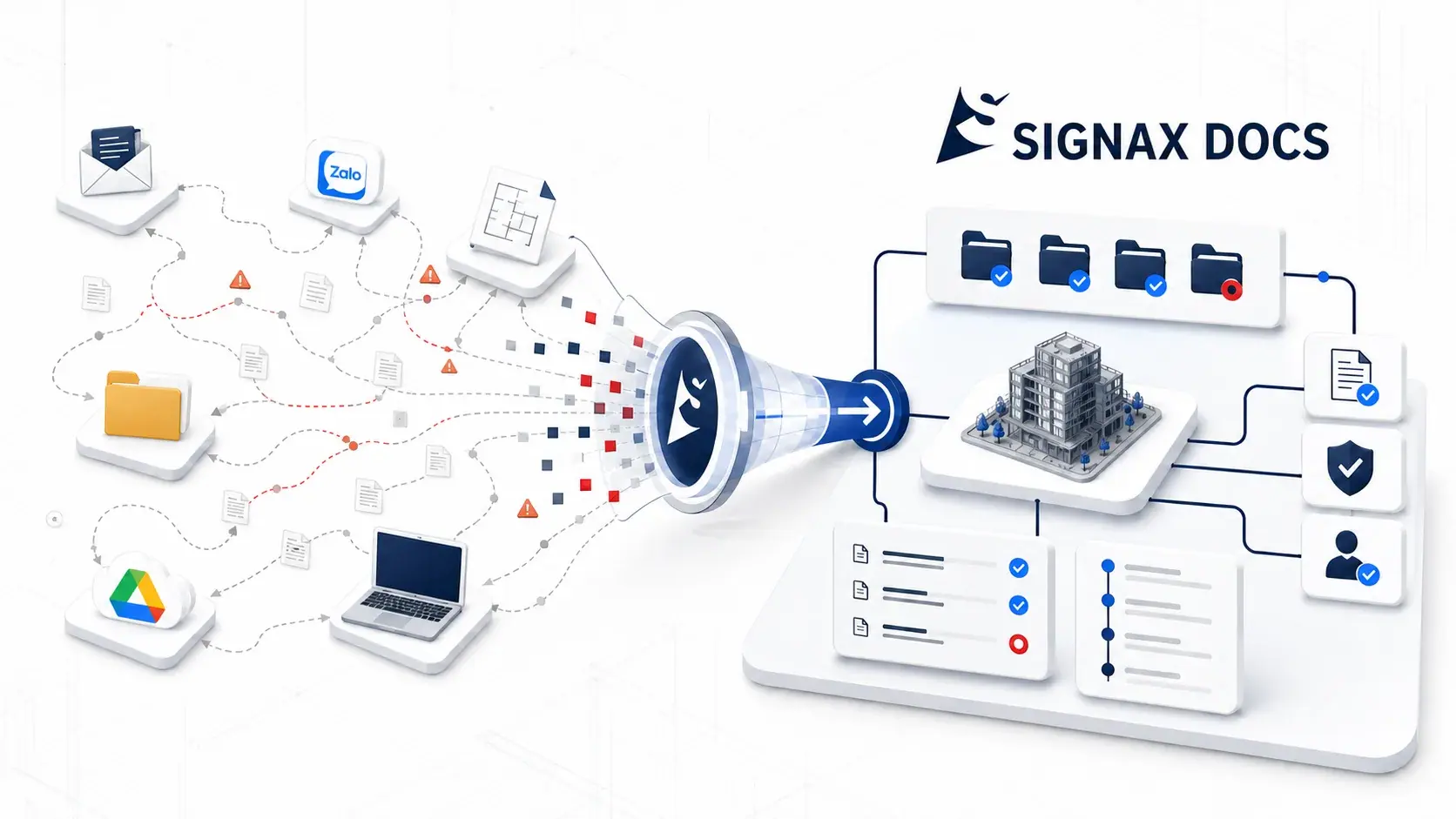
A common data environment is the agreed source of information for a project — the single place where every model, drawing, and document is collected, and where each one carries a defined status. ISO 19650, the international standard for managing information across the asset life cycle, describes information moving through work-in-progress, shared, published, and archived states, with a check at each boundary.
That structure is what turns a model into something a project can rely on. Without it, “the latest model” is a claim rather than a fact, and the cost of being wrong is paid on site.
What changes day to day
The visible change is that questions stop being about which file to trust. A revision has a number, an issue date, an author, and an approver. Superseded material is archived rather than deleted, so it stays available for reference without being mistaken for current.
The second change is that site and office stop working from different information. An issue raised in the field attaches to a location and an element in the model rather than arriving as a photograph in a chat group, and it carries its own status until someone closes it.
- One current revision, with a visible approval trail behind it
- Superseded documents archived, not floating in inboxes
- Site observations tied to model elements and locations
- A record of who issued what, to whom, and when

Where the return shows up
Clash detection gets the attention, but the recurring savings are duller than that. Time spent hunting for the current drawing disappears. Approval cycles shorten because the reviewer receives a defined package rather than a folder. Rework caused by building to a superseded detail becomes rare, because superseded details are no longer in circulation.
The value that is easiest to overlook arrives at the end. When variations or delays are disputed, an auditable record of what was issued and approved, and when, is worth considerably more than a reconstruction from memory. And at handover, the as-built information set is a by-product of how the project was run rather than a scramble in the final month.
Starting without boiling the ocean
The common failure is to buy a platform and announce it. What works better is to take one live project, agree a BIM execution plan and a naming convention, put every party — design, main contractor, subcontractors, supervision — into the same environment, and let the habits form there before rolling it wider.
There is a regulatory reason to start now rather than later. Vietnam's BIM roadmap already requires the model as part of the design and completion dossiers on state-funded works, and authorities are being equipped to review it directly. A CDE is what makes that submission repeatable instead of a project in itself.
Key points
- A CDE is the agreed source of project information, with a defined status for every file.
- ISO 19650 structures information as work-in-progress, shared, published, and archived.
- The recurring savings come from shorter approval cycles and less rework on superseded information.
- An auditable issue record matters most in disputes and at handover.
A common data environment for your projects
TPG TECH implements the SIGNAX platform in Vietnam: document control, BIM coordination, site inspection and progress reporting in one common data environment.
Explore the SIGNAX CDE platform